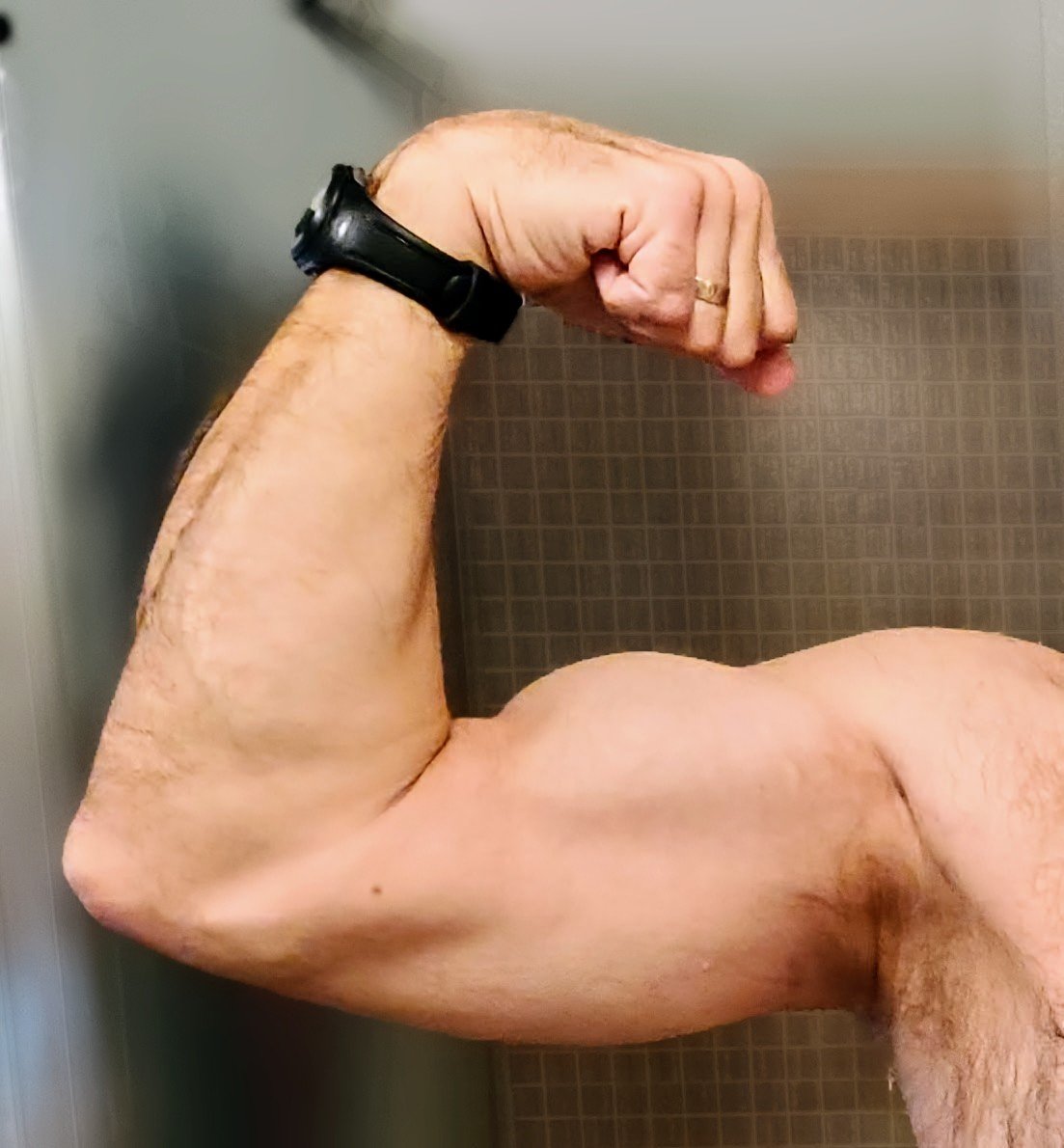
Can Flabby Arms Be Toned After 60? The Truth About Tightening and Strengthening Aging Arms
Can flabby arms be toned after 60?
If you’ve looked in the mirror, waved at someone, and noticed a little extra “jiggle,” you’re not alone.
Many adults over 60 wonder if it’s still possible to firm up their arms — or if that ship has sailed.
The good news: Yes, flabby arms can absolutely be toned after 60.
The better news: The process is simpler (and safer) than you might think.
Let’s break down what’s really happening in your arms — and exactly what it takes to tighten, strengthen, and reshape them after 60.
Can Flabby Arms Be Toned After 60? The Short Answer
Yes — But “Toning” Means Something Specific
When people ask, “Can flabby arms be toned after 60?” they’re usually talking about:
- Reducing arm jiggle
- Improving firmness
- Seeing more definition
- Feeling stronger
Here’s the key: “Toning” is not a special type of exercise. It simply means:
Building muscle while reducing body fat.
You cannot spot-reduce fat from just your arms. But you can build muscle in your arms and reduce overall body fat, which makes the arms appear firmer and tighter.
Why Age 60 Is Not a Barrier to Muscle Growth
One of the biggest myths is that muscle growth stops after 60. It doesn’t.
Even with age-related muscle loss (known as sarcopenia), your body still responds to resistance training.
Muscle protein synthesis may be slightly slower than at 25 — but it absolutely still works.
In fact, many adults over 60 see dramatic improvements in:
- Muscle firmness
- Strength
- Arm shape
- Overall upper-body tone
Age changes the pace — not the possibility.
Why Arms Become Flabby After 60
Understanding the cause makes the solution clearer.
Sarcopenia (Age-Related Muscle Loss)
After age 50, most adults lose 1–2% of muscle mass per year if they aren’t strength training. After 60, this can accelerate.
The upper arms — especially the triceps — are often one of the first places muscle loss becomes visible.
Less muscle = softer appearance.
Hormonal Changes After 60
Hormones that support muscle mass — like testosterone, growth hormone, and (in women) estrogen — decline with age.
These changes can:
- Make muscle harder to maintain
- Encourage fat storage
- Slow recovery
But again, resistance training counteracts much of this.
Reduced Activity Levels
Retirement often means less daily lifting, carrying, pushing, and pulling. Without regular stimulus, muscles shrink.
“Use it or lose it” becomes very real after 60.
Increased Body Fat and Fat Redistribution
As metabolism slows, body fat can increase — particularly in the upper arms for women.
This layer of fat over reduced muscle creates the classic “flabby arm” look.
Skin Elasticity Changes
Collagen production declines with age, which can reduce skin tightness.
Even so, increasing underlying muscle mass significantly improves the appearance of firmness.
What It Really Takes to Tone Flabby Arms After 60
If you’re serious about answering “Can flabby arms be toned after 60?” the answer comes down to three pillars: progressive overload, body composition, and consistency.
Strength Training Is Non-Negotiable
Walking is great for your heart.
But it won’t firm your arms.
To tone flabby arms after 60, you must include progressive resistance exercise, which can be performed using:
- Dumbbells
- Resistance bands
- Machines
- Bodyweight exercises
The key is progressive overload — gradually increasing resistance over time.
Light pink dumbbells forever?
That won’t reshape your arms.
Challenging, controlled resistance?
That will.
Build Muscle in the Right Places
The triceps (back of the arm) are responsible for most “arm jiggle.”
Focus on:
- Triceps strength
- Overall upper-body compound movements
- Balanced training (push + pull)
You don’t need endless isolation exercises — just smart programming.
Reduce Overall Body Fat (If Needed)
If excess fat is contributing to arm softness:
- Maintain a slight calorie deficit
- Prioritize protein
- Avoid crash dieting
Severe calorie restriction after 60 often causes muscle loss — making arms look worse, not better.
Consistency Over Intensity
You don’t need extreme workouts.
You need:
- 2 sessions per week
- Gradual progression
- Patience
Consistency beats hero workouts every time.
The Best Exercises to Tone Flabby Arms After 60
Here are highly effective, joint-friendly options.
Compound Upper-Body Movements
These build the most muscle in the least time:
- Dumbbell chest press
- Seated rows
- Lat pulldowns
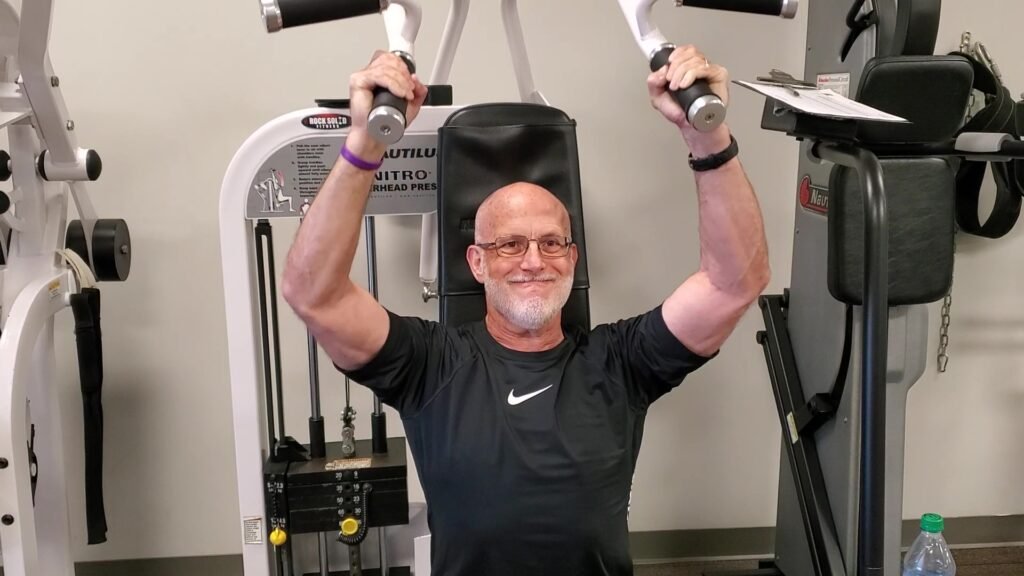
- Overhead presses
These exercises stimulate multiple muscle groups, including the triceps and biceps.
Direct Triceps Exercises
To directly target the back of the upper arms:
- Triceps cable pushdowns
- Dumbbell kickbacks
- Machine tricep extensions
Focus on controlled movement, not speed.
Direct Biceps Exercises
For balanced arm development:
- Dumbbell curls
- Cable curls
- Machine bicep curls
Stronger biceps improve arm shape and function.
How Often Should You Train Arms After 60?
Ideal frequency:
- 2 times per week as part of a full-body workout
- 48 hours between sessions
- 1 set per exercise with maximum effort
- 7-10 controlled reps
Recovery is crucial. Muscles grow during rest.
Nutrition Strategies to Help Tone Arms After 60
Exercise builds the stimulus. Nutrition builds the result.
Protein Requirements After 60
Older adults often need more protein, not less.
Aim for:
- 1.2-1.6 grams per kilogram of bodyweight daily
- 30–40 grams per meal
This supports muscle repair and growth.
Managing Calories Without Starving
If fat loss is needed:
- Use a small calorie deficit (200–400 calories/day)
- Keep protein high
- Continue lifting weights
Crash dieting shrinks muscle — which makes arms appear softer.
Hydration and Micronutrients
Pay attention to:
- Vitamin D
- Omega-3 fatty acids
- Adequate hydration
These support recovery and joint health.
How Long Does It Take to Tone Flabby Arms After 60?
Patience matters.
First 4 Weeks
- Strength improves
- Muscles feel firmer
- Better mind-muscle connection
5–8 Weeks
- Visible firmness
- Reduced jiggle
- Clothes fit differently
2-6 Months
- Significant strength gains
- Clear reshaping of arm contour
- Dramatic functional improvement
The longer you stay consistent, the better the results.
Common Mistakes People Over 60 Make When Trying to Tone Arms
Endless Easy Reps With Tiny Weights
High reps with no challenge won’t stimulate growth.
Avoiding Progressive Overload
If the weight never increases, the body never adapts.
Overdoing Cardio and Skipping Strength
Cardio burns calories.
Strength reshapes your body.
Not Eating Enough Protein
Without protein, muscle growth stalls.
Expecting Immediate Results
Real transformation takes months — not weeks.
Safety Considerations When Training Arms After 60
Protect Your Shoulders and Elbows
- Warm up thoroughly
- Use controlled tempo
- Avoid jerky movements
Manage Arthritis or Joint Pain
- Use comfortable equipment
- Adjust range of motion
- Choose neutral-grip exercises
Pain is not required for progress.
When to Consult a Professional
If you have:
- Previous shoulder injuries
- Chronic joint issues
- Medical conditions
Get clearance before beginning.
Can Flabby Arms Be Completely Eliminated After 60?
Let’s be realistic.
Genetics Matter
Some people store more fat in their upper arms. That’s normal.
Skin Laxity Plays a Role
If skin elasticity has declined significantly, some looseness may remain — even after fat loss.
What “Toned” Really Means After 60
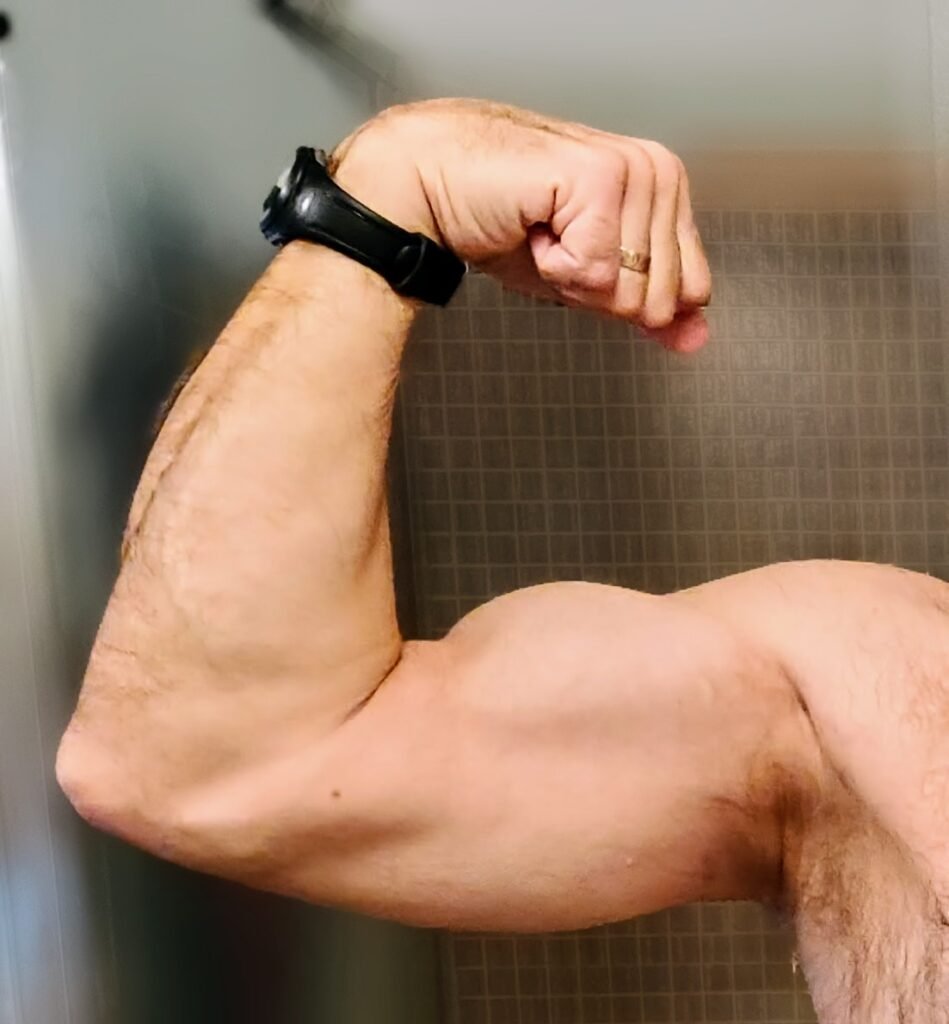
Toned does not mean “20-year-old arms.”
It means:
- Firmer
- Stronger
- Less jiggle
- More functional
- More confident
And yes — that is absolutely achievable.
The Bigger Benefit: Why Toning Your Arms After 60 Is About More Than Appearance
When you train your arms, you improve:
Functional Strength
- Carrying groceries
- Lifting luggage
- Playing with grandchildren
Bone Density
Resistance training supports skeletal health.
Posture
Stronger upper back and shoulders improve alignment.
Independence
Strength equals longevity and self-sufficiency.
FAQ: Can Flabby Arms Be Toned After 60?
Is it really possible to tone flabby arms after 60?
Yes. With consistent strength training, adequate protein, and proper recovery, muscle can be built and fat reduced at any age.
How many days a week should I train my arms?
Two to three times per week is ideal, allowing at least one day of rest between sessions.
Can I tone my arms without lifting weights?
Resistance is required. This can include bodyweight exercises or bands — but some form of progressive resistance is necessary.
Do I need heavy weights?
You need challenging weights. That may be moderate weight lifted with control. The final rep should be almost impossible.
What if I have shoulder pain?
Modify exercises, reduce range of motion, and consider working with a qualified trainer or physical therapist.
How long before I see results?
Most people notice firmness within 4-6 weeks. Significant visual change typically takes a couple months of consistency.
Are flabby arms just loose skin?
Sometimes partially. But in most cases, it’s a combination of reduced muscle mass and increased fat — both of which can be improved.
Final Verdict: Can Flabby Arms Be Toned After 60?
Absolutely.
It requires:
- Progressive strength training
- Adequate protein
- Moderate calorie control (if needed)
- Patience
- Consistency
Your arms may not look 25 again — but they can look strong, firm, and capable.
And more importantly?
They can be strong, firm, and capable.
That’s what truly matters after 60.
Comments (0)