How to Regain Muscle Mass After 60
Why Muscle Loss Accelerates After 60 (And Why It’s Reversible)
If you’re searching for how to regain muscle mass over 60, the first step is understanding why it was lost in the first place.
Muscle loss after 60 is real — but it’s often misunderstood.
The good news?
For previously active adults, much of that loss is not permanent. In many cases, it’s highly reversible with the right training and nutrition strategy.
Let’s break down what’s actually happening inside your body.
Understanding Sarcopenia vs. Inactivity
After age 60, most adults experience some degree of sarcopenia — the age-related decline in muscle mass and strength. But here’s what many people miss:
There’s a massive difference between:
- True age-related muscle degeneration
- Muscle loss from reduced training, injury, illness, or lifestyle changes
For previously active adults, a large percentage of muscle loss is often due to detraining, not irreversible aging.
This is one of the most encouraging truths about how to regain muscle mass over 60: you did it once, now all you have to do is do it again.
Hormonal Changes After 60
Hormones do shift after 60 — and they do influence muscle rebuilding — but they are not a brick wall.
In men:
- Testosterone gradually declines
- Free testosterone drops more significantly
In women:
- Estrogen declines after menopause
- This impacts muscle repair and recovery
In both men and women:
- Growth hormone and IGF-1 levels decrease
- Protein synthesis becomes less responsive
However, strength training over 60 remains one of the most powerful natural stimulators of anabolic hormones at any age.
Heavy resistance training:
- Improves insulin sensitivity
- Enhances protein utilization
- Stimulates muscle-building pathways
While hormonal levels may not match your 35-year-old self, your muscles are still highly responsive to mechanical tension and progressive overload.
In other words, hormones make it harder — not impossible.
Anabolic Resistance: The Real Challenge
The most important concept to understand when learning how to regain muscle mass over 60 is something called anabolic resistance.
Anabolic resistance means:
- Older muscle requires a stronger stimulus to grow
- Smaller protein doses are less effective
- Light training produces minimal hypertrophy
Your body simply needs a clearer signal.
That signal comes from:
- Adequate protein per meal (often 30–40g of high-quality protein)
- Sufficient total daily protein
- Progressive resistance training that challenges the muscle
- Training close enough to muscular fatigue
The mistake many adults over 60 make is reducing intensity out of fear — switching to very light weights and high reps without meaningful load.
But research shows that muscle responds to tension — at any age.
When you:
- Lift progressively heavier over time
- Eat enough protein
- Allow proper recovery
You overcome anabolic resistance and stimulate growth again.
The Bottom Line
Muscle loss accelerates after 60 because of:
- Reduced activity
- Hormonal changes
- Anabolic resistance
- Recovery limitations
But none of these eliminate your ability to rebuild.
For previously active adults especially, the body retains the cellular structure and adaptive capacity to regain lost muscle.
Understanding these physiological shifts is the foundation of mastering how to regain muscle mass over 60 — and sets the stage for rebuilding strength safely, intelligently, and aggressively in the years ahead.
Step 1 — Rebuild Your Strength Foundation Safely
If you want to master how to regain muscle mass over 60, you must resist the urge to “jump back in” where you left off.
Previously active adults often make one of two mistakes:
- They train like they’re still 35 and get hurt.
- They train far too lightly and never stimulate growth.
The solution is rebuilding your strength foundation strategically — restoring movement quality, rebuilding neuromuscular efficiency, and progressively reintroducing meaningful load.
Assessing Where You Are Now
Before you add serious resistance, you need a realistic snapshot of your current baseline.
Focus on three key areas:
- Mobility
- Can you squat to parallel comfortably?
- Can you raise your arms overhead without compensation?
- Do your hips and ankles move freely?
Restricted mobility often causes compensations that increase joint stress under load.
- Joint Health
- Old shoulder injuries
- Arthritic knees
- Lower back sensitivity
Distinguish between stiffness (normal) and sharp joint pain (needs modification).
- Strength Baseline
Start conservatively:
- Bodyweight exercises
- Light dumbbells or machines
- Work in a medium rep range (7-12)
- Gradually increase the weights and intensity
The goal is not to test max strength. It’s to assess control, stability, and confidence under load.
If you’re serious about how to regain muscle mass over 60, you must first earn the right to train hard again.
Reintroducing Progressive Resistance Training
Once movement quality is solid, it’s time to progressively load the body.
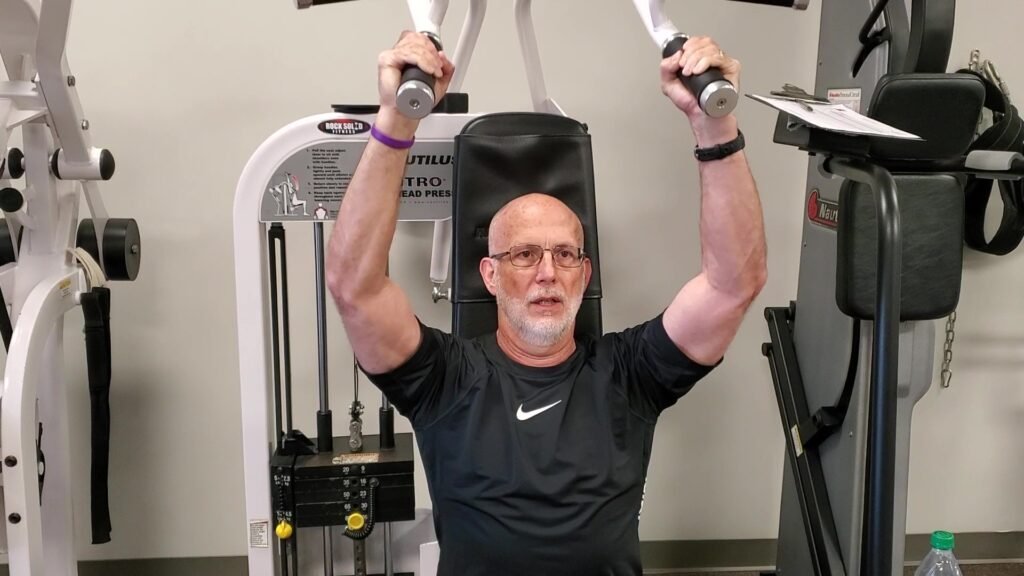
For many adults over 60, machines can be useful early on:
- Leg press instead of barbell squat
- Chest press instead of barbell bench
- Supported rows instead of bent-over rows
Machines reduce stabilization demands and allow you to focus on generating tension safely.
A full-body routine 2 times per week is ideal during the rebuilding phase. It allows sufficient recovery while providing frequent anabolic signals.
The key is controlled progression:
- Add reps first
- Then add small amounts of weight
- Avoid ego lifting
This is how you create momentum without setbacks — a crucial part of learning how to regain muscle mass over 60.
How Heavy Should You Train After 60?
One of the biggest myths is that adults over 60 should only lift light weights.
Muscle grows in response to mechanical tension, not age.
For hypertrophy:
- Work primarily in the 7–12 rep range
- Use a slow, controlled rep speed
- Get as close to muscular failure as safely possible
Very light weights performed casually will not overcome anabolic resistance.
That said, maximal singles are not necessary.
You want:
- Moderate to heavy loading
- Controlled reps
- Strong mind-muscle connection
- Consistent progression
Intensity drives adaptation — but intelligent intensity preserves longevity.
Frequency and Recovery Needs After 60
Recovery is where many previously active adults underestimate the difference between 35 and 65.
After 60:
- Connective tissue adapts slower than muscle
- Inflammation lingers longer
- Sleep quality may decline
For most people rebuilding muscle:
- 2 resistance sessions per week is ideal
- At least two full rest days between sessions
- Take a full week off every 12 weeks if needed
Signs you’re under-recovering:
- Persistent joint soreness
- Declining performance
- Poor sleep
- Unusual fatigue
Remember, the goal isn’t to survive workouts. It’s to accumulate high-quality training over months.
If you want sustainable success in how to regain muscle mass over 60, consistency beats hero workouts every time.
The Foundation Principle
Rebuilding muscle after 60 is not about proving something.
It’s about:
- Restoring movement and preserving muscle mass
- Progressively increasing load
- Training hard enough to stimulate muscle growth
- Recovering well enough for growth to occur
Lay the foundation correctly now — and the muscle will follow.
Step 2 — Optimize Recovery Like It’s Your Job
If you truly want to understand how to regain muscle mass over 60, you must shift your mindset:
Training stimulates growth.
Recovery creates it.
After 60, recovery is no longer optional or automatic. It becomes a strategic part of the muscle-building process.
Your joints, connective tissue, nervous system, and hormonal environment all require more intentional support than they did decades ago.
For previously active adults, this is often the missing piece.
Sleep: The Ultimate Muscle Rebuilder
Sleep is the most underrated anabolic tool available — especially after 60.
During deep sleep:
- Growth hormone is released
- Muscle repair accelerates
- Inflammation decreases
- The nervous system resets
Consistently sleeping 7–9 hours per night dramatically improves your ability to rebuild muscle.
Unfortunately, sleep often declines with age due to:
- Increased stress
- Nighttime awakenings
- Poor sleep habits
If you’re serious about how to regain muscle mass over 60, treat sleep like training:
- Keep a consistent bedtime and wake time
- Limit screens 60 minutes before bed
- Keep your bedroom cool and dark
- Avoid heavy meals and alcohol late at night
Even a 30–60 minute improvement in sleep duration can noticeably impact strength recovery.
Stress and Cortisol After 60
Chronic stress quietly sabotages muscle rebuilding.
Elevated cortisol:
- Increases muscle breakdown
- Impairs recovery
- Reduces sleep quality
- Increases abdominal fat storage
Many adults over 60 juggle work transitions, family responsibilities, financial concerns, or health issues — all of which increase stress load.
The solution isn’t eliminating stress. It’s managing it.
Simple, effective strategies:
- Daily walking (20–30 minutes)
- Light aerobic sessions on non-lifting days
- Controlled breathing or relaxation work
- Time outdoors
Low-intensity movement increases blood flow, enhances nutrient delivery, and accelerates recovery without adding additional stress.
If your nervous system is constantly “on,” muscle rebuilding slows down — no matter how good your workouts are.
Active Recovery and Mobility
Recovery does not mean inactivity.
In fact, light movement often speeds up muscle repair.
Active recovery may include easy cycling, brisk walking, or gentle mobility work
These sessions:
- Increase circulation
- Reduce stiffness
- Improve range of motion
- Promote nutrient delivery to muscle tissue
Mobility work is especially important for maintaining joint integrity as you increase training loads.
Focus on:
- Hips
- Shoulders
- Ankles
When joints move well, muscles can be trained harder and more safely — which is critical when applying progressive overload.
The Recovery Advantage
Many people focus exclusively on sets and reps when researching how to regain muscle mass over 60.
But the competitive advantage at this age is not who trains the hardest.
It’s who:
- Recovers the most consistently
- Sleeps the best
- Manages stress effectively
- Trains hard enough — but not excessively
After 60, muscle is rebuilt between workouts.
Make recovery a deliberate strategy — not an afterthought — and your strength, size, and performance will steadily return.
Common Mistakes Previously Active Adults Make
When it comes to how to regain muscle mass over 60, the biggest obstacles aren’t usually biological.
They’re behavioral.
Previously active adults often have experience, discipline, and work ethic.
But they also carry old training habits, outdated nutrition ideas, and ego-driven expectations that can slow progress — or cause setbacks.
Avoiding the following mistakes can dramatically accelerate your muscle rebuilding.
Training Like You’re Still 30
This is the most common trap.
If you were strong and consistent in your 30s, it’s tempting to return to:
- High-volume training
- Heavy loading right away
- Minimal rest days
- “No days off” mentality
The problem isn’t intensity — it’s recovery capacity.
After 60:
- Tendons adapt slower than muscle
- Joint cartilage is less forgiving
- Systemic fatigue accumulates faster
Jumping straight into five hard sessions per week often leads to nagging shoulder pain, irritated knees, or lower back flare-ups.
If you’re serious about how to regain muscle mass over 60, your edge comes from strategic progression — not proving you still “have it.”
Train hard. But ramp intelligently.
Not Training Hard Enough
On the opposite end of the spectrum, some adults overcorrect.
Fear of injury leads to:
- Very light weights
- Endless high-rep sets
- Avoiding compound lifts
- Never approaching muscular fatigue
This does not overcome anabolic resistance.
Muscle requires mechanical tension. That means:
- Challenging loads
- Focused effort
- Progressive overload
- Getting to (or near) muscular failure
You don’t need maximal lifts. But you do need meaningful stimulus.
If you’re not progressively increasing reps, weight, or training density, you’re not rebuilding.
Understanding how to regain muscle mass over 60 means embracing intelligent intensity.
Doing Too Much Cardio
Cardio has health benefits. But excessive endurance training can interfere with muscle gain.
Common issues include:
- Long daily cardio sessions
- High-intensity intervals on top of lifting
- Large calorie deficits from excessive activity
This creates an energy gap.
Muscle rebuilding requires:
- Adequate calories
- Sufficient recovery
- Strength training priority
If cardio dominates your weekly plan, hypertrophy will stall.
For most previously active adults:
- 2–3 short cardio sessions per week
- Low to moderate intensity
- Separate from heavy leg days when possible
Cardio should support recovery — not compete with muscle growth.
Ignoring Nutrition Because “I Used to Know How”
Experience can become a blind spot.
Many adults over 60 assume:
- “I’ve built muscle before — I know how to eat.”
- “I don’t need to track anything.”
- “I eat healthy — that’s enough.”
But aging changes protein requirements and appetite signals.
Common mistakes include:
- Undereating protein
- Skipping meals
- Eating too “clean” and unintentionally staying in a deficit
- Not distributing protein evenly across the day
Anabolic resistance means your body now needs:
- More protein per meal (often 30–40g)
- Higher total daily protein
- Consistency
Nutrition that worked at 30 may not be sufficient at 65.
If you’re committed to mastering how to regain muscle mass over 60, your diet must evolve along with your training.
The Pattern Behind These Mistakes
Notice the theme:
- Too much intensity too soon
- Or not enough intensity at all
- Too much cardio
- Not enough fuel
Rebuilding muscle after 60 isn’t about extreme measures.
It’s about precision.
Avoid these common pitfalls, and your experience becomes an asset — not a liability — in rebuilding strength, size, and performance.
FAQ: How to Regain Muscle Mass After 60
If you’re researching how to regain muscle mass over 60, you likely have specific, practical concerns.
Below are clear, evidence-based answers to the most common questions previously active adults ask when rebuilding strength and size.
Is it really possible to build muscle after 60?
Yes — absolutely.
Muscle tissue remains highly adaptable well into your 60s, 70s, and beyond. While anabolic resistance makes the process slightly less efficient than in your 30s, the body still responds to:
- Progressive resistance training
- Adequate protein intake
- Proper recovery
In fact, previously active adults often regain muscle faster than lifelong sedentary individuals.
If you’re consistent and train intelligently, rebuilding is not only possible — it’s expected.
How heavy should a 60-year-old lift?
The short answer: heavy enough to challenge the muscle safely.
For most people learning how to regain muscle mass over 60, this means:
- Working primarily in the 7 –12 rep range
- Using loads that feel very challenging by the last 2–3 reps
- Getting to muscular failure by the end of the set
You do not need maximal lifts or one-rep max testing. But you do need meaningful mechanical tension.
Extremely light weights performed casually will not stimulate significant hypertrophy.
The key is controlled intensity with excellent technique.
Do I need testosterone therapy to regain muscle?
In most cases, no.
While testosterone levels decline with age, resistance training remains a powerful stimulus for muscle growth independent of hormone replacement.
Before considering medical intervention, focus on:
- Progressive strength training
- 1.2 to 1.6 grams of protein per kilogram of bodyweight in daily protein
- Quality sleep
- Stress management
Many adults regain substantial muscle mass without hormone therapy.
Medical decisions should always be discussed with a qualified healthcare provider — but hormone therapy is not a prerequisite for understanding how to regain muscle mass over 60.
How much protein should I eat to regain muscle mass after 60?
Protein needs increase with age due to anabolic resistance.
A strong evidence-based target is 1.2 – 1.6 grams per kilogram of bodyweight.
Equally important is distribution.
Aim for:
- 30–40 grams of high-quality protein per meal
- 3–4 protein feedings per day
High-leucine protein sources (like eggs, dairy, meat, and whey protein) are particularly effective at stimulating muscle protein synthesis.
Undereating protein is one of the most common reasons muscle rebuilding stalls.
How long will it take to see results?
Timelines vary, but here’s a realistic framework for previously active adults:
Weeks 1–2:
Improved neuromuscular efficiency and strength gains without visible size change.
Weeks 3–6:
Noticeable increases in muscle fullness and strength.
2–6 months:
Significant rebuilding if training, nutrition, and recovery are consistent.
If you stay consistent, the process of how to regain muscle mass over 60 becomes measurable within a few workouts.
Should I avoid certain exercises after 60?
There are no universally “forbidden” exercises.
However, exercise selection should reflect:
- Joint health
- Mobility
- Injury history
- Technical proficiency
For example:
- Leg presses in place of barbell squats
- Machine or dumbbell chest presses in place of barbell bench presses.
The goal is not to eliminate compound lifts — it’s to choose variations you can progressively overload without joint irritation.
Smart modification beats blanket avoidance.
Is creatine safe after 60?
For most healthy adults, creatine monohydrate is both safe and effective.
Research consistently shows that creatine:
- Improves strength
- Enhances muscle mass gains
- Supports recovery
- May even support cognitive health
A typical dose is:
- 3–5 grams per day
As always, individuals with kidney conditions or medical concerns should consult their physician before supplementation.
When combined with resistance training, creatine can meaningfully support your efforts in how to regain muscle mass over 60.
Final Thought
Rebuilding muscle after 60 is not about chasing your 30-year-old self.
It’s about:
- Training intelligently
- Eating strategically
- Recovering deliberately
- Staying consistent
When those pieces align, muscle growth remains not only possible — but sustainable — for decades to come.
Comments (0)