
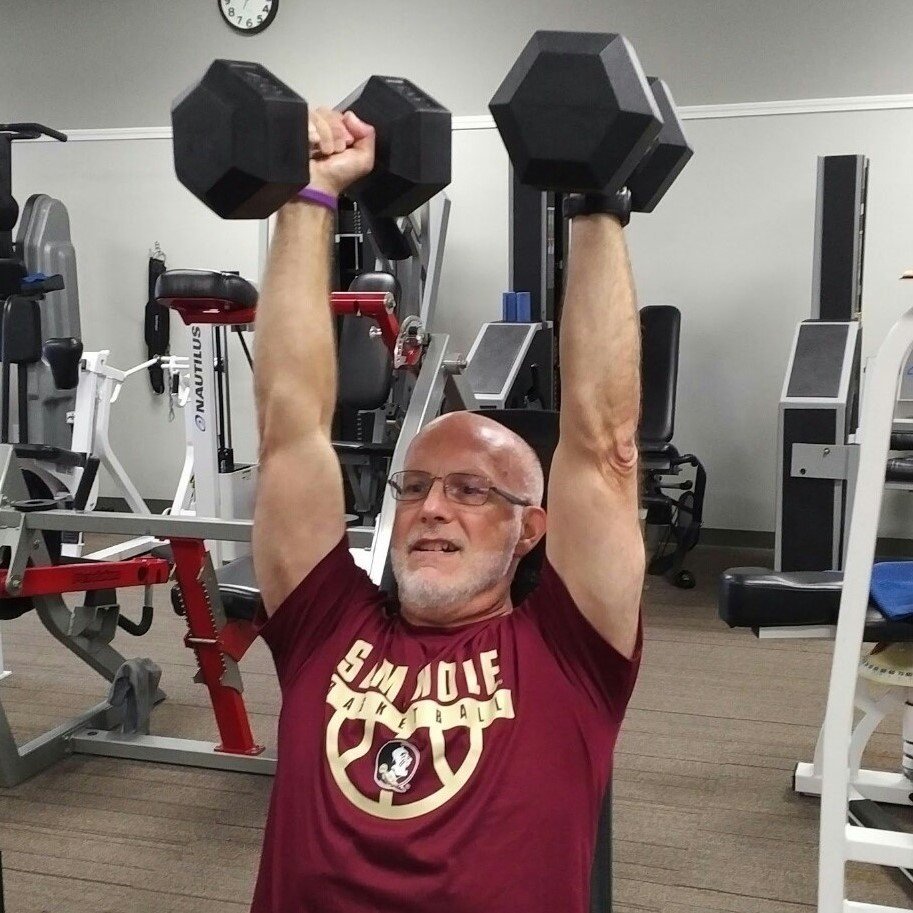
Strength Training Over 60: How to Build Muscle, Stay Strong, and Train Smart for Life
Why Strength Training Over 60 Is Non-Negotiable
When it comes to long-term independence, vitality, and resilience, strength training over 60 is not optional — it’s essential. The real threat to your health isn’t lifting weights. It’s allowing muscle, bone, and functional capacity to quietly decline year after year.
Modern research in sports medicine and leading organizations like the American College of Sports Medicine consistently emphasize that resistance training is one of the most powerful forms of physical activity for older adults.
Done correctly, it helps you build strength, protect joints, preserve muscle mass, and extend healthspan — not just lifespan.
Let’s break down why strength training over 60 is truly non-negotiable.
The Real Risk Isn’t Training — It’s Muscle Loss
After 60, adults naturally lose muscle mass at an accelerated rate if they’re inactive. This age-related decline affects far more than appearance.
Loss of muscle impacts:
- Metabolic health
- Blood sugar regulation
- Joint stability
- Balance and coordination
- Fall risk
- Overall physical independence
Without regular resistance training, the body becomes less capable each year. Simple movements like standing from a chair, climbing stairs, or carrying groceries become harder. That decline isn’t inevitable — but inactivity makes it likely.
The solution is progressive strength training exercises performed consistently each week. Whether you use body weight, dumbbells, barbells, or machines like the leg press, the stimulus from weight training signals your body to preserve and rebuild muscle.
For older adults, especially women over 60 who face higher osteoporosis risk, strength training over 60 is one of the most effective tools to maintain bone density and structural integrity.
The real danger isn’t heavy weights. It’s getting weaker.
Strength as the Foundation of Longevity
Strength is one of the strongest predictors of long-term health outcomes in older populations. Studies published in peer-reviewed journals consistently link greater muscular strength with lower all-cause mortality.
Why?
Because strength supports everything else:
- It improves balance and reduces falls
- It protects joints by stabilizing the body
- It supports posture and spinal health
- It increases metabolic efficiency
- It enhances recovery from illness or surgery
Strength training over 60 is not just about building muscle — it’s about reinforcing the entire system.
When your lower body is strong, you walk with more stability. When your upper body is strong, you maintain posture and shoulder health. When your core is strong, you move with control and confidence.
This is why resistance training is strongly recommended by experts in sports medicine and organizations like the American College of Sports Medicine for older adults.
Strength is not vanity. It is infrastructure.
The Psychological Edge of Staying Strong
The benefits of strength training over 60 aren’t only physical — they’re mental.
When you train consistently:
- You feel capable
- You move with confidence
- You maintain independence
- You reinforce discipline
There is a powerful psychological shift that happens when you commit to a structured exercise program. Instead of viewing aging as decline, you begin viewing it as adaptation.
- Each week you show up.
- Each week you lift a little more weight.
- Each week you become slightly stronger.
That momentum compounds.
Many older adults underestimate how empowering resistance training can be.
Strength becomes a feedback loop — the stronger you get, the more active you stay. The more active you stay, the better your overall health.
If you’re serious about maintaining control over your body, your mobility, and your independence, then strength training over 60 must be part of your regular physical activity.
Because aging is inevitable. Getting weaker is not.
What Changes After 60 (And What Doesn’t)
To approach strength training over 60 intelligently, you need clarity about what actually changes in the body — and what doesn’t.
Too many older adults either underestimate themselves or ignore physiological realities.
The truth sits in the middle: your body does change after 60, but it remains remarkably adaptable to well-designed resistance training.
Understanding those changes allows you to build strength safely, preserve muscle mass, and structure an exercise program that works with your body — not against it.
Recovery Takes Longer — But Adaptation Still Happens
One of the most noticeable differences after 60 is recovery time.
You may find that:
- Soreness lasts longer
- Heavy training sessions feel more taxing
- You need more rest days between intense workouts
Muscle protein synthesis becomes slightly less efficient with age. Hormonal levels shift. Connective tissues may not bounce back as quickly.
But here’s the key point:
Your body still adapts to progressive resistance training.
Strength training over 60 still stimulates muscle growth.
You can still build muscle. You can still increase weight gradually. You can still become stronger.
What changes is how you manage recovery:
- Train 2 times per week instead of daily
- Train briefly, but intensely
- Prioritize sleep and protein intake
Recovery isn’t a weakness — it’s a variable you must manage.
Older adults who respect recovery often make steadier long-term progress than younger lifters who rely on intensity alone.
Joints Need Smarter Loading, Not Less Loading
A common mistake among adults over 60 is avoiding weight training because of joint stiffness or past injuries.
But inactivity accelerates joint decline.
Cartilage, tendons, and ligaments respond positively to appropriately dosed load.
Strength training exercises increase blood flow, improve joint stability, and reinforce the surrounding muscle that protects vulnerable areas.
The key isn’t eliminating load — it’s applying it intelligently.
For example:
- Use a leg press if barbell squats irritate the knees
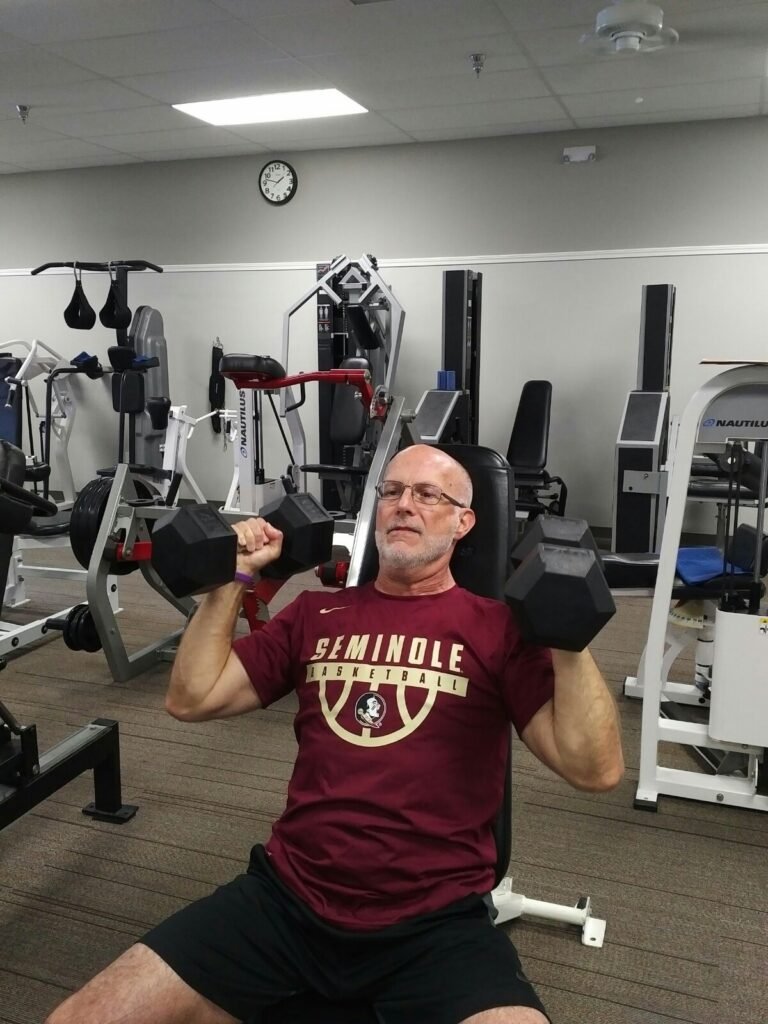
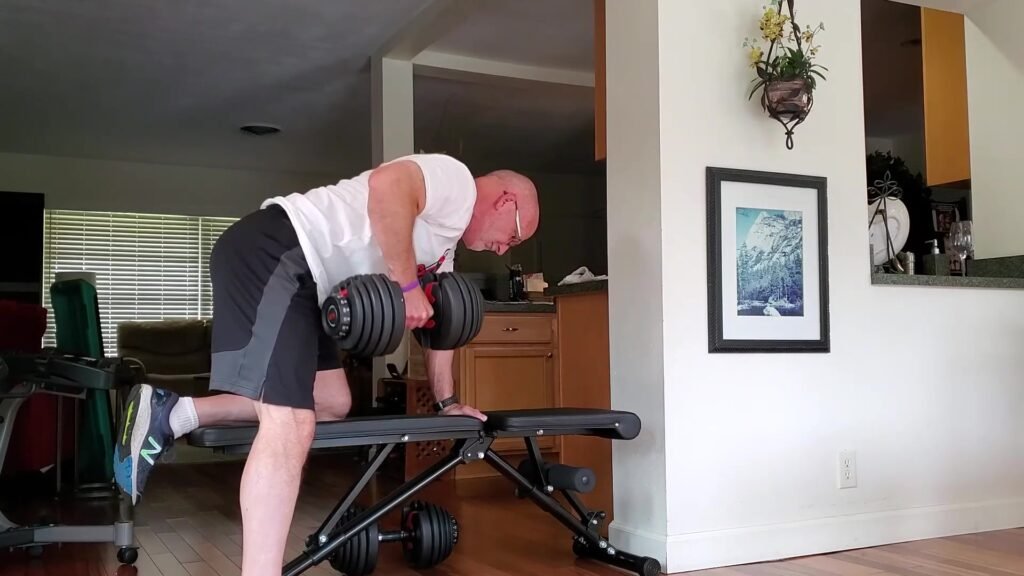
- Use dumbbells for more natural shoulder positioning
- Emphasize controlled tempo over sloppy reps
- Modify range of motion without abandoning the movement
Lower body strength is especially critical for balance and fall prevention. Upper body training supports posture and shoulder health.
Smart resistance training improves joint resilience. Avoiding movement weakens it.
When designed correctly, strength training over 60 supports long-term joint health rather than threatening it.
Hormones Decline — But They’re Not an Excuse
Yes, testosterone, growth hormone, and other anabolic hormones decline with age. This is a normal biological process.
But hormonal changes do not eliminate your ability to build strength or maintain muscle mass.
Mechanical tension — the force placed on muscle during weight training — remains the primary driver of adaptation. When you challenge the body with progressive overload, it responds.
You may not gain muscle as quickly as you did at 30. That’s normal. But progress is still possible.
Hormonal decline explains slower progress — not no progress.
Strength training over 60 is about working with biology, not fighting it.
What Doesn’t Change: The Laws of Training
Despite the changes that occur with age, certain principles remain constant:
- Progressive overload builds strength
- Consistency beats intensity
- Proper exercise technique reduces injury risk
- Recovery determines long-term success
Muscle still responds to challenge. Bone density still responds to load. The body still adapts to physical activity.
Age modifies the pace — it does not cancel the process.
If you structure your training program around intelligent progression, balanced lower body and upper body exercises, and adequate recovery, strength training over 60 remains one of the most powerful tools for protecting health and independence.
Your body changes.
But it never stops responding to smart, consistent training.
Mindset: Training for the Next 30 Years
If you’re committed to strength training over 60, you must think differently than you did at 40.
This phase of life isn’t about chasing short-term PRs or proving something in the gym. It’s about building a body that will serve you for the next 20–30 years.
The goal is not just to lift heavy weights this month — it’s to stay strong, capable, and independent for decades.
Strength training over 60 is a long game. And your mindset determines whether you thrive or stall.
Stop Comparing to Your 40-Year-Old Self
One of the biggest mental traps older adults fall into is comparing current performance to past numbers.
- Maybe you used to squat more weight.
- Maybe recovery was faster.
- Maybe workouts felt easier.
That’s normal.
But strength training over 60 isn’t about recreating your 40-year-old body.
It’s about building the strongest possible version of your current body.
Progress now might look like:
- Adding 5 pounds to a lift over several weeks
- Improving range of motion
- Training consistently two days per week
- Reducing joint discomfort
That’s real progress.
When you stop competing with your younger self, you free yourself to train intelligently.
You focus on quality strength training exercises, proper form, and sustainable overload.
The result? You get stronger — safely.
Long-Term Consistency Beats Intensity Bursts
The real secret to success with strength training over 60 is consistency.
Not:
- Crushing yourself with random heavy sessions
- Changing your exercise program every week
- Jumping between trends you found on Google
Instead, long-term progress comes from:
- Structured resistance training
- Progressive overload
- Planned recovery
- Showing up week after week
Two well-designed workouts per week, done consistently for years, will outperform occasional heroic efforts every time.
Muscle mass builds slowly. Bone density improves gradually. Strength increases incrementally.
But when you stack those small improvements across months and years, the transformation is dramatic.
Older adults who stay consistent often surpass peers who train harder but inconsistently.
The Real Goal: Independence and Capability
Strength training over 60 is not primarily about aesthetics. It’s about capability.
Can you:
- Carry heavy groceries?
- Lift luggage into an overhead compartment?
- Climb stairs without hesitation?
- Get up from the floor unassisted?
Lower body strength improves balance and reduces fall risk. Upper body strength supports posture and shoulder health. Core stability enhances coordination and control.
This is where resistance training becomes more than exercise — it becomes insurance.
Maintaining muscle, preserving joint function, and continuing physical activity protects your independence.
You’re not just training your body. You’re protecting your lifestyle.
Think in Decades, Not Weeks
When you approach strength training over 60 with a 30-year mindset, everything changes.
- You stop chasing exhaustion and start chasing sustainability.
- You prioritize recovery as much as weight lifted.
- You focus on building strength gradually instead of testing it constantly.
You understand that getting stronger at 65 sets you up for resilience at 75.
And that is powerful.
Aging is unavoidable. Decline is not automatic.
With intelligent weight training, consistent effort, and a long-term mindset, older adults can continue building strength, muscle, and health for decades to come.
Train today so your future self is still strong.
FAQ: Strength Training Over 60
Below are answers to the most common questions motivated older adults ask about strength training over 60.
These address safety, muscle growth, recovery, and how to structure an effective exercise program for long-term health.
Is it safe to start strength training at 60 or older?
Yes — strength training over 60 is safe for most older adults when approached intelligently.
In fact, resistance training is strongly recommended by experts in sports medicine and organizations like the American College of Sports Medicine as a foundational form of physical activity for adults over 60.
The key is to:
- Start with manageable weights
- Focus on proper technique
- Progress gradually
- Allow adequate recovery
Many injuries occur not because of strength training itself, but because people try to lift too heavy too soon.
If you have medical conditions or past injuries, consult your physician and consider working with a qualified fitness coach who understands exercise science and older populations.
Done correctly, strength training over 60 improves health rather than jeopardizing it.
Can you still build muscle after 60?
Absolutely.
While muscle protein synthesis slows slightly with age, the body still responds to progressive resistance training.
Older adults can build muscle mass, increase strength, and improve body composition with a well-designed training program.
To maximize results:
- Train 2 times per week
- Prioritize compound strength training exercises
- Eat sufficient protein
- Focus on progressive overload
You may not gain muscle as quickly as you did at 30, but steady progress is realistic and sustainable.
Strength training over 60 is about consistent improvement — not overnight transformation.
Should people over 60 lift heavy?
“Heavy” is relative.
For strength training over 60, lifting challenging weights is beneficial — provided form remains solid and recovery is managed properly.
Moderate-to-heavy resistance training improves:
- Muscle mass
- Bone density
- Functional strength
- Balance
However, heavy training does not mean maximal lifts every week.
Older adults will benefit from:
- Working in the 6–12 rep range
- Not using explosive movements
- Avoiding frequent maximal attempts
You can build strength without constantly testing it.
How long does it take to see results?
With consistent strength training over 60, most adults notice strength gains within 2-3 weeks.
Visible muscle changes may take longer, depending on:
- Training consistency
- Nutrition
- Recovery
- Previous training history
Improvements in energy, balance, posture, and confidence often appear even sooner.
Remember: small weekly improvements compound dramatically over months and years.
What exercises should be avoided after 60?
No exercise is automatically forbidden in strength training over 60.
Instead of eliminating movements, focus on modifying them if needed.
For example:
- Use a leg press instead of barbell squats to protect your spine
- Choose dumbbells over barbells for shoulder comfort
- Adjust range of motion
- Slow the tempo for better control
The goal is to train the entire body — lower body, upper body, and core — while respecting individual limitations.
Pain that persists or worsens is a signal to adjust the exercise, not to abandon training entirely.
How important is balance training?
Balance becomes increasingly important as we get older, and strength training over 60 naturally supports it.
Lower body strength is particularly critical for fall prevention.
Building strength improves balance. The two are closely connected.
How many rest days are needed?
Most older adults benefit from:
- 2 strength training sessions per week
- At least two rest days between workouts
- Lighter active recovery days if desired
Recovery becomes more important with age. Adequate sleep, hydration, and protein intake are essential for muscle repair.
Strength training over 60 works best when stress and recovery are balanced. More is not better.
If you approach strength training over 60 with patience, progression, and consistency, you can continue building strength, preserving muscle, and protecting your health for decades to come.
Comments (0)